

Dunder casino Plinko
Introduction
Plinko at Dunder casino is one of those rare games review for Canadian players that looks almost too simple at first glance. There is no reel set, no payline map, no card table, and no dense rule panel to decode before the first round. You choose a stake, set a risk level, drop the ball, and watch it bounce through a field of pegs until it lands in a payout slot. That is the whole visible idea. But from a player’s point of view, the real story starts under that simplicity.
I have spent enough time reviewing online casino products to say this with confidence: Plinko stands out not because it is complicated, but because it turns randomness into something you can actually watch unfold in real time. That matters. In a slot, the result appears after the spin resolves. In Plinko, the route itself becomes part of the experience. The ball drifts left, corrects right, clips a peg, drops again, and each tiny deflection creates a brief sense that something meaningful is happening on screen. The outcome is still random, but the journey is visible, and that changes how players perceive the session.
For Canadian players browsing Dunder casino Plinko, the key question is not whether the interface looks entertaining. The real question is what the format offers in practice: how the rhythm feels, how the risk setting changes the session, where the volatility comes from, and whether this style of play matches your expectations better than slots, roulette, or crash-style products. That is what I will focus on here.
What Plinko is and why it attracts so much attention
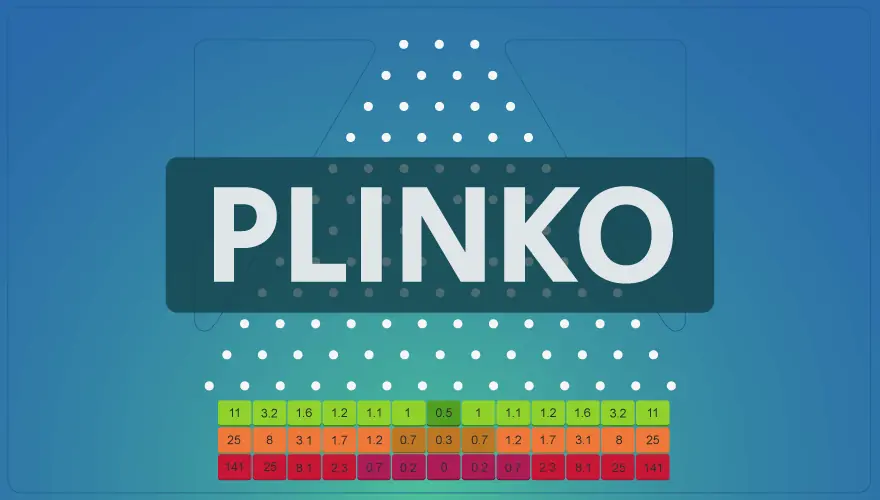
Plinko is a chance-based casino game built around a vertical board filled with pins or pegs. A ball is released from the top and falls downward, bouncing left and right until it reaches one of several payout zones at the bottom. Each landing position has its own multiplier. Lower multipliers tend to sit near the center, while the most dramatic returns usually appear on the far edges, where the ball reaches less often.
The reason this format has become so noticeable is straightforward: it is easy to understand, quick to start, and visually satisfying in a way that many digital casino products are not. A player does not need to learn hand rankings, bonus symbols, side bets, or table strategy. The learning curve is light. At the same time, the emotional pattern of the session can be surprisingly intense, because every drop creates a small suspense arc.
There is also another reason for its visibility. Plinko compresses several things that online players often want into one format:
Fast decision-making — stake size, board setup, and risk level can usually be adjusted in seconds.
Immediate feedback — the result arrives quickly, but not instantly, which keeps attention locked on the descent.
Clear exposure to variance — players can feel the difference between conservative and aggressive settings without reading a long help file.
That combination makes Plinko accessible for newcomers and still interesting for experienced users who want a break from conventional slots. It is not a substitute for every other format, but it fills a very specific gap: simple input, visible randomness, and highly adjustable session intensity.
How the Plinko mechanic actually works
At Dunder casino, the practical appeal of Plinko depends on understanding one basic fact: the ball does not move with intention, and the board is not a puzzle to solve. The path is generated by chance. Every collision with a peg redirects the ball left or right, and after a series of these tiny random shifts, it lands in a multiplier slot at the bottom.
From the player’s side, the mechanic usually revolves around a few core settings. The exact interface can vary depending on the provider, but the logic remains consistent.
| Element | What it does | Why it matters in practice |
|---|---|---|
| Stake | Sets the amount used for each drop | Directly controls session cost and the absolute size of returns |
| Risk level | Changes the payout distribution across the board | Has a major effect on volatility and how often modest returns appear |
| Rows or board depth | Determines how many peg collisions the ball goes through | Influences the spread of possible landing zones and session feel |
| Auto-play or repeated drops | Runs multiple rounds automatically | Can speed up the session and reduce conscious pacing |
The visible movement may feel organic, but players should be careful not to confuse visual drama with influence. You are not steering the ball. There is no timing trick that reliably improves outcomes. This is important because Plinko’s presentation can create a stronger illusion of “almost control” than slots do. When the ball bounces toward a high multiplier and then slips back to the center, it feels personal. Mathematically, it is still random.
One of the most useful ways to think about the board is this: the center is usually where results cluster, while the edges are where the headline multipliers live. That means the most eye-catching returns are also the least frequent. In other words, the game advertises possibility through its outer slots, but funds most sessions through much smaller outcomes. That tension is the heart of Plinko.
Why the game feels exciting and how its pace works in a real session
Plinko has a rhythm that is very different from both slots and top Dunder Casino games before depositing real money. It is fast, but not abrupt. Each round is short, yet it gives the eye enough time to follow the ball and project hope onto the next bounce. This creates a subtle but effective pacing loop: anticipation builds during the drop, resolves at the landing, and resets almost immediately for the next round.
That loop is one reason players stay engaged longer than they initially expect. The interface does not bombard you with bonus meters or cinematic animations, but the repeated descent itself becomes a kind of event. In practical terms, the session can feel lighter than a slot grind and more active than a static instant-result format.
I would highlight three observations here that often get missed in generic Trustpilot ratings details:
Plinko can feel calmer than it really is. The board looks playful, almost harmless, but a high-risk setup can produce sharp bankroll swings in a short span.
The ball’s path creates emotional false signals. A near miss on an edge multiplier feels significant even though it changes nothing about future drops.
Auto-play changes the psychology more than the math. It does not make outcomes better, but it can make losses arrive with less friction because the pause between decisions disappears.
For players at Dunder casino Plinko, this means the tempo is not just a design detail. It directly affects spending behavior, emotional engagement, and how long a session feels sustainable. A game that resolves quickly and invites repeated drops can eat through a balance faster than its clean interface suggests.
How risky Plinko is and who will actually enjoy it
Plinko can be relatively gentle or highly aggressive depending on the selected risk level. This is one of the format’s defining strengths. Instead of burying volatility inside a paytable that many players never study, it puts the session profile closer to the surface. If you raise the risk, the board usually shifts toward more extreme multiplier distribution: lower-value outcomes become more common, while larger returns become possible but rarer.
That means risk in Plinko is not abstract. It is something you feel quickly. On lower settings, the session may produce more frequent small recoveries, which can make the balance curve look smoother. On higher settings, long dry stretches become more likely, but the occasional strong hit can reshape the whole run.
| Risk profile | Typical session feel | Best suited for |
|---|---|---|
| Low | More stable, more modest landings, fewer dramatic spikes | Players who want longer sessions and less severe balance swings |
| Medium | Balanced mix of routine outcomes and occasional stronger moments | Players looking for visible variance without extreme pressure |
| High | Sharper drops, rarer standout returns, more tension per round | Players comfortable with dry runs and aggressive variance |
Who is this game for? In my view, Plinko suits players who enjoy short cycles of suspense and do not need a layered narrative to stay interested. If you like seeing randomness unfold instead of simply receiving an instant result, this format has real appeal. It also works for players who want to control session tone through risk settings rather than hunt for a specific slot profile.
Who may not enjoy it? Players who prefer structured bonus rounds, thematic immersion, or a stronger sense of progression may find Plinko too bare. It can also disappoint anyone who mistakes visual simplicity for low exposure. The board looks clean, but the variance can be unforgiving, especially when the chase for edge multipliers takes over the session.
What players should understand about odds, variance, and possible outcomes
Before launching Dunder casino Plinko, it helps to separate three ideas that are often blurred together: probability, payout potential, and session expectation. A large multiplier on the board does not mean it is likely to appear within your next few drops. A run of center landings does not mean an edge result is “due.” And a dramatic hit early in the session does not prove the setup is favorable. Each drop is its own event.
In practical terms, Plinko often follows a familiar pattern: many rounds land in lower or middle zones, while the top-end multipliers act as rare outliers. This is what creates the contrast between ordinary session flow and standout moments. If you approach the board expecting frequent large returns, the experience will feel disappointing. If you approach it understanding that the big numbers are infrequent by design, the game becomes easier to read correctly.
Another point matters here. The visual route of the ball can make probability feel more transparent than it really is. Because you watch the descent peg by peg, it is tempting to think you are witnessing a system you can “read.” In reality, what you are mostly seeing is a presentation layer for randomness. That does not reduce the entertainment value, but it should keep expectations grounded.
For bankroll management, the lesson is simple: Before you make a deposit, it is worth reading mobile access information for Dunder Casino players for the fee and speed details.
Set a stake that still feels comfortable after a sequence of low multipliers.
Treat high-risk mode as a specialized session choice, not as the default setting.
Use auto-play carefully, because speed can hide how quickly the balance is changing.
Plinko is easy to start, but it rewards disciplined expectations more than impulsive chasing.
How Plinko differs from classic slots and other casino formats
The easiest comparison is with online slots, because that is where many players arrive from. A slot usually revolves around reels, symbol combinations, special icons, bonus triggers, and a paytable that can be surprisingly dense. The entertainment often comes from layered events: base spins, feature triggers, current Dunder Casino free spins information for online casino players, multipliers, and occasional bonus rounds. Plinko strips almost all of that away.
The difference is not just visual. It changes how the player experiences cause and effect.
In a slot, the result is delivered as a completed event. In Plinko, the result unfolds in front of you. That creates a more physical feeling of movement, even though the underlying randomness remains just as important. The board turns chance into a visible process.
Compared with roulette, Plinko offers more visual progression during each round. Compared with blackjack, it removes decision depth almost entirely. Compared with crash games, it replaces timing pressure with path-watching suspense. So while it shares some DNA with simple chance-based products, it occupies its own space.
This is why I would not describe Plinko as “just another casual casino game.” It is closer to a hybrid between instant-play simplicity and slot-style variance, but without slot-style thematic packaging. That distinction matters for players choosing between formats:
Choose Plinko if you want short rounds, visible randomness, and adjustable session intensity.
Choose slots if you want more layered content, bonus structure, and thematic depth.
Choose table games if you want clearer rules, slower pacing, or strategic input.
Practical strengths and weaker points of the format
Plinko has several genuine advantages, but they only matter if they match the player’s style. I would summarize the practical picture like this.
Low barrier to entry: the rules are easy to grasp almost immediately.
Clear control over session tone: risk settings make a visible difference.
Strong round-by-round suspense: the descent creates engagement without long setup.
Good fit for short sessions: you can understand the format quickly and decide whether it suits you.
On the other side, there are limitations that players should not ignore.
Limited depth: if you need evolving features or narrative progression, Plinko can feel repetitive.
High exposure under aggressive settings: the clean design can hide how volatile the session really is.
Strong temptation to chase extremes: the edge multipliers are visually seductive, but they are not regular outcomes.
Potentially misleading sense of control: watching the path does not mean influencing it.
That last point is especially important. One of Plinko’s most interesting qualities is also one of its traps: because the randomness is animated rather than concealed, players may feel more connected to the result than they actually are. It is entertaining, but it can also make cold probability feel warmer and more personal than it is.
What to check before starting a Plinko session at Dunder casino
If you are considering Dunder casino Plinko, I would suggest looking at the game through a practical checklist rather than jumping in based on appearance alone.
First, check the available risk settings and understand what kind of session you want. If the goal is a longer, steadier run, a lower setting is usually the sensible starting point. If the goal is to chase larger multipliers with full awareness of sharper balance swings, then a higher setting may fit, but it should be a deliberate choice.
Second, pay attention to stake size in relation to speed. Plinko rounds can resolve quickly, and repeated drops can build volume fast. A stake that looks small in isolation may become expensive over a sequence of rapid rounds.
Third, if a demo mode is available, use it to read the rhythm rather than to “solve” the board. Demo play is useful for understanding pacing, interface flow, and how different setups feel. It is not a predictive tool for future real-money outcomes.
Finally, ask yourself a simple question: do you enjoy watching chance play out, or do you prefer making decisions inside the round? That answer matters more here than in many other casino categories. Plinko is about selection before the drop, not strategic control during it.
Final verdict
Dunder casino Plinko offers a very specific kind of casino experience: minimal rules, fast rounds, visible randomness, and a session profile that can shift from relatively calm to highly aggressive depending on the chosen risk level. Its strongest quality is clarity. You can understand what the game is doing almost immediately, and you can feel the effect of its settings without digging through a complicated paytable.
That said, the game’s simplicity should not be mistaken for softness. Plinko can produce sharp swings, especially when players lean toward higher-risk setups or let auto-play run without much attention. The board looks clean and approachable, but the variance underneath it deserves respect.
For players who enjoy short suspense cycles, transparent structure, and a more visual form of chance than classic slots provide, Plinko can be a strong fit. For those who want deeper features, stronger thematic immersion, or more decision-making during each round, it may feel too narrow after the initial novelty fades.
My overall view is clear: Plinko is worth trying if you want a direct, modern casino format that makes randomness visible and keeps the session moving. Just go in with the right expectations. The appeal is real, but so is the volatility. That balance is exactly why some players keep coming back to it, while others are better off choosing a different style of play.
FAQ
How does Plinko work on the game lobby screen?
A ball drops from the top and bounces off pegs until it lands in a scoring slot. Each slot has its own multiplier that applies to the placed bet.
What should a returning player check before launching Plinko again on the official site?
Start by checking the bet size and the selected balance mode. If a previous session left a different deposit amount or bet step, the next round may not match expectations.
Which risk level should players expect from Plinko multipliers?
Plinko payouts depend on where the ball lands, so the multiplier path is less predictable than fixed odds. Higher multipliers can happen, but lower results are equally possible depending on the peg bounce pattern.
How does an active bonus effect change the Plinko rounds?
An active bonus can alter how rounds count toward wagering and whether certain bet types are eligible. The game interface will reflect the current promotion status and any bonus-related limitations before each spin.
If Plinko does not start, which mirror or access option should be checked first?
A working mirror may be required when one access route is unavailable or blocked. Trying the current mirror displayed in the account access area is the quickest step before contacting support.